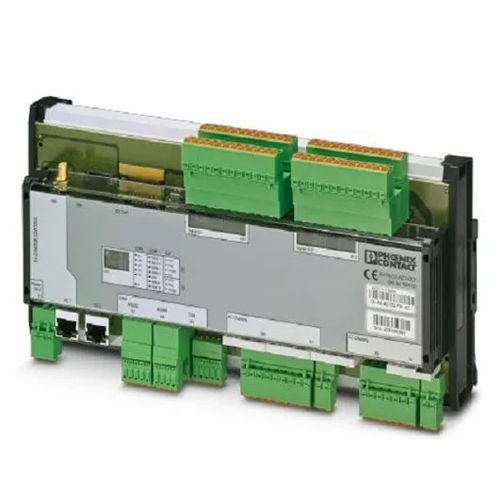
About Electric Vehicle Charge Controller
We are marked amongst the leading traders and exporters of high-quality Electric Vehicle Charge Controller in the market. It is processed by our professionals with the use of good quality required materials with the assistance of advanced techniques and tools. This item is utilized for managing the charging process of an electric vehicle's battery. Electric Vehicle Charge Controller works by regulating the flow of electricity from the charging station to the vehicle's battery. We stringently testify this range of items on various quality parameters ensuring supreme quality product delivery to our esteemed client base.
| Minimum Order Quantity |
20 Piece |
| Charging Mode |
Mode 4 |
| Communication |
Din Spec 70121 |
| Communication Interface |
Ethernet |
| Digital Input |
16 |
| No. of Charging Points |
2 |
| Standards/regulations |
IEC 61851 1 |
Communication Flexibility and ComplianceThis EV charge controller supports RS485, CAN, and Ethernet interfaces, allowing integration with a wide variety of industrial systems. Compliant with IEC 61851 and ISO 15118 standards, it ensures secure and smart charging sessions, adaptable for both legacy systems and modern communication protocols.
Intelligent Control and DiagnosticsEngineered for reliability, the controller offers both automatic and manual operation through various interfaces, with real-time status monitoring via LED indicators. Built-in self-diagnosis and fault logging streamline maintenance, enabling swift identification and resolution of potential issues.
Durable Design and Easy InstallationConstructed with a metal housing and rated at IP20 for ingress protection, the charge controller mounts easily on DIN rails for secure, quick deployment in industrial settings. Its robust isolation and thermal tolerance from -20C to 60C make it suitable even for challenging environments.
FAQ's of Electric Vehicle Charge Controller:
Q: How does the charge controller facilitate communication with other industrial systems?
A: The controller supports RS485, CAN, and Ethernet interfaces, enabling integration with different industrial automation and monitoring platforms. This versatility ensures compatibility with existing infrastructure and future upgrades, making data exchange seamless and secure.
Q: What are the main safety features incorporated in this charge controller?
A: Safety is ensured through galvanic isolation rated at 2.5 kV AC, under/over-voltage, over-current, short-circuit protection, and overload protection. The controller is also compliant with international standards (IEC 61851, ISO 15118) and provides metal enclosure and natural air cooling for enhanced durability.
Q: When should the controller's firmware be updated, and how is this achieved?
A: Firmware updates are recommended when new features or critical improvements are released by the manufacturer. Updates can be performed either remotely via the communication interfaces or locally, ensuring the device operates efficiently and securely with the latest enhancements.
Q: Where is this charge controller best suited for installation?
A: Designed for industrial applications, the device is ideal for installation in factories, warehouses, charging stations, and other facilities that require reliable three-phase EV charging. The DIN rail mounting simplifies integration into electrical distribution panels typical in such environments.
Q: What is the process for troubleshooting faults with this controller?
A: The self-diagnosis feature continuously monitors internal functions and logs faults automatically. Status LED indicators provide immediate visual cues, while detailed diagnostics can be accessed via connected communication interfaces, enabling rapid troubleshooting and maintenance.
Q: How does automatic and manual control enhance the charging process?
A: Users can switch between fully automatic charging, which leverages built-in algorithms for efficiency, and manual control for custom charging profiles via the supported interfaces. This flexibility allows precise management tailored to specific operational requirements.
Q: What are the key benefits of choosing this EV charge controller for industrial use?
A: The controller delivers high accuracy charging, rapid response times, robust protection features, and exceptional efficiency. Its adaptability, compliance, and remote management options result in reduced downtime, streamlined operations, and future-ready industrial charging infrastructure.








 Send Inquiry

 Send Inquiry
